What Is a Puppy Mill? A Complete Guide to How They Operate, How to Spot Them, and How to Avoid Supporting Them
Almost everyone who has walked past a pet store window has seen the same scene: a row of adorable puppies, each with a price tag. Many shoppers assume those puppies came from a caring local breeder. Often they did not. Many came from puppy mills, large-scale commercial breeding operations that prioritize profit over the welfare of dogs.

Understanding what a puppy mill is, how it works, why it persists, and how to avoid supporting one is one of the most useful things a prospective dog owner can learn. This guide covers the definition, the conditions typically found, the health and behavior consequences for dogs, the legal landscape, how puppies reach buyers, warning signs, and what to do instead. A detailed FAQ and conclusion follow at the end.
A note on accuracy: laws, inspection rules, and enforcement differ widely between countries, states, and regions, and they change over time. The legal sections here are general. Check current rules where you live.
What Is a Puppy Mill?
A puppy mill is a commercial dog-breeding operation that mass-produces puppies for sale with little regard for the health, welfare, or socialization of the animals. The defining feature is not simply size. It is the business model: keep costs low, keep production high, and sell as many puppies as possible, regardless of the dogs’ wellbeing.
There is no single legal definition that applies everywhere. Animal welfare groups generally use the term to describe operations where:
- Breeding dogs are kept in poor, overcrowded, or unsanitary conditions
- Dogs receive little veterinary care, exercise, or companionship
- Females are bred repeatedly with little recovery time
- Puppies are produced in large numbers and sold through brokers, pet stores, or online
- Health testing and genetic screening are absent
- The animals are treated as inventory, not as living beings
Puppy Mill Versus Commercial Breeder
Not every large or licensed breeder is a puppy mill. Some commercial breeders operate legally and provide adequate care. The difference is in the standard of care. Critics argue that legal minimum standards in some places are low enough that operations can be technically compliant yet still deliver poor welfare. Others argue that licensed facilities that meet or exceed requirements should not be lumped in with the worst offenders. Because of this debate, the best approach is to evaluate the actual conditions and practices, not just the label or license status.
Backyard Breeders and Puppy Farms
Related terms cause confusion:
- Backyard breeder. A small-scale breeder, often an amateur, who breeds dogs without much knowledge of health, genetics, or temperament. They may be well-meaning but can produce unhealthy puppies.
- Puppy farm. A term used in the United Kingdom, Ireland, and elsewhere for the same kind of high-volume, low-welfare operation.
- Puppy broker or dealer. A middleman who buys puppies from mills and resells them to pet stores or online buyers.
- Hobby breeder. A person who breeds a few litters carefully, usually with health testing and a focus on improving the breed. This is the standard to look for.
How Puppy Mills Operate
The Breeding Dogs
At the center of a puppy mill are the breeding dogs, sometimes called “breeder dogs” or “parent dogs.” They may spend their entire lives in cages or small enclosures, producing litter after litter. Females may be bred at every heat cycle with minimal recovery time. When they are no longer productive, they may be sold, abandoned, surrendered, or killed, although some are rescued.
The Environment
Conditions reported by investigators and welfare organizations at the worst facilities include:
- Overcrowding. Many dogs housed together in confined spaces
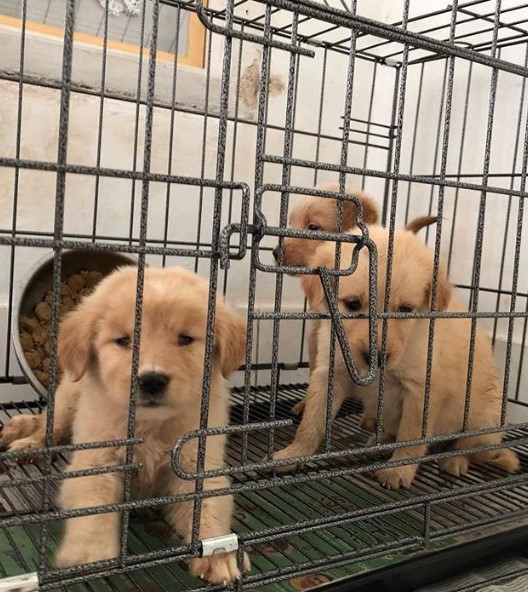
- Wire-floor cages. Wire flooring can injure paws and legs
- Stacked cages. Waste falling from upper cages onto the dogs below
- Poor sanitation. Accumulated feces, urine, and stagnant water
- Extreme temperatures. Inadequate heating, cooling, and ventilation
- Inadequate food and water. Poor-quality or inconsistent feeding
- Lack of veterinary care. Untreated illnesses, injuries, and dental disease
- No exercise or enrichment. Dogs may rarely leave their enclosures
- Minimal human contact. Little socialization or affection
Not every mill has every problem, and some operations present a cleaner face than their reality. But these conditions are the pattern that gave the term its meaning.
Puppies
Puppies in mills are typically separated from their mothers early, sometimes before eight weeks of age. They may be shipped long distances, crowded together in transport, and exposed to stress and disease. Many are sold through intermediaries, so the buyer never sees where the puppy was born.
Where Do They Sell?
Puppy mills reach consumers through several routes:
- Pet stores. Retail shops often source puppies from commercial breeders and brokers, though some stores have changed policies to work with shelters instead.
- Online sellers. Websites and classified ads can make it easy to purchase puppies unseen. Photos may show cute puppies in pleasant settings that have nothing to do with the real conditions.
- Brokers and dealers. These middlemen purchase and distribute puppies.
- Flea markets, parking lots, and roadside sales. Informal sales where there is no accountability.
- Direct sales from facilities that appear to be small family breeders.
- Social media sales where sellers can hide behind friendly profiles.
Why Puppy Mills Persist
- Demand. People want puppies of particular breeds, and many buy impulsively.
- Profit. Low costs and high volume make the business lucrative.
- Marketing. Slick websites and persuasive stories hide reality.
- Lack of transparency. Buyers rarely see the breeding facilities.
- Weak enforcement. Inspection and regulation may be limited, and penalties inconsistent.
- Consumer unawareness. Many buyers do not know what to ask.
- Fashion trends. Popular and “designer” breeds create surges in demand that mills rush to meet.
The Impact on Dogs
On Breeding Dogs
Dogs kept in these conditions can suffer physical and psychological harm. Reported problems include:
- Chronic stress and fear
- Untreated dental disease, infections, and injuries
- Matted coats and skin conditions
- Joint and foot problems from wire flooring
- Reproductive complications from repeated breeding
- Behavioral signs of deprivation, such as shyness, repetitive pacing, spinning, or withdrawal
- Difficulty adapting to normal home life when rescued, since they may never have walked on grass, climbed stairs, or experienced household sounds
Many rescued mill dogs recover beautifully with patience, but recovery can take months or years.
On Puppies
Puppies from mills are at higher risk of:
- Infectious diseases, such as parvovirus, distemper, kennel cough, and parasites, particularly when they are stressed and shipped early
- Inherited conditions, because breeding stock is often not health-tested
- Behavioral problems, including fearfulness, anxiety, difficulty with house training, and aggression, because they lacked early socialization
- Poor early nutrition and care
- Early separation from mother and littermates, which can disrupt development
Not every puppy from a mill will have problems, and some from small breeders will. But the risk is much higher when breeding stock and conditions are neglected.
On Buyers
Families who buy mill puppies can face:
- High veterinary bills for illness or genetic conditions
- Emotional heartbreak if a puppy becomes seriously ill or dies
- Behavior challenges that require training and patience
- Disputes with sellers over refunds or guarantees
- Unwitting support for an industry they would not endorse
Common Health Issues Linked to Poor Breeding
Because puppy mills rarely screen breeding dogs, inherited problems can pass down. Depending on the breed, these may include:
- Hip and elbow dysplasia
- Heart disease
- Eye conditions
- Respiratory problems in flat-faced breeds
- Patellar luxation
- Spinal and neurological disorders
- Endocrine disorders
- Dental problems
- Skin conditions and allergies
Puppies can also arrive with parasites, respiratory infections, and viral diseases that may not be obvious at purchase. A guarantee from a seller is only as good as the seller’s willingness to honor it.
Legal Landscape
General Picture
Laws about commercial dog breeding vary. In many places there are licensing and inspection requirements for breeders above a certain size, as well as animal cruelty laws that apply to any owner. In others, rules are minimal or poorly enforced.
Typical Types of Regulation
- Licensing and inspection. Large breeders and sellers may need licenses and periodic inspections.
- Minimum standards of care. Rules about housing, space, sanitation, feeding, and veterinary care.
- Limits on breeding frequency. Some jurisdictions restrict how often females can be bred.
- Age requirements. Rules about when puppies can be sold, often not before eight weeks.
- Pet store restrictions. A growing number of cities and some larger jurisdictions have restricted or banned the retail sale of commercially bred puppies, in some cases requiring stores to work with shelters and rescues.
- Online sales rules. Some places regulate or require disclosure for online sellers.
- Cruelty and neglect laws. Apply regardless of licensing.
Limits of the Law
- Standards may be minimal. Compliance with the law does not guarantee good welfare.
- Enforcement can be limited. Resources for inspection are often stretched.
- Loopholes exist. Sellers can avoid regulation through size thresholds or by selling online.
- Cross-border issues. Puppies may be bred in one place and sold in another with different rules.
What You Can Do
Check the rules where you live. Report suspected cruelty to local animal control, humane law enforcement, or the relevant welfare organization. Support legislation that improves standards and transparency, if you wish.
How to Spot a Puppy Mill or Irresponsible Seller
A seller who is hiding something often shows a pattern of warning signs. No single sign proves a puppy mill, but several together should make you walk away.
Red Flags About the Seller
- Will not let you visit. A reputable breeder welcomes visits to see where puppies are raised. A seller who insists on meeting in a parking lot, offers to deliver, or says the puppies are “at another location” is hiding something.
- Will not let you meet the mother. The mother should be present and healthy. Excuses are a bad sign.
- Sells many breeds. Responsible breeders usually specialize in one or two breeds.
- Always has puppies available. Good breeders plan litters and often have waiting lists.
- Pressures you to buy quickly. High-pressure tactics, deposits through unusual payment methods, or “limited time” claims are warning signs.
- Offers to ship without meeting. Shipping a puppy unseen is risky.
- Asks few or no questions. Responsible breeders screen buyers carefully.
- Cannot show health records. No vaccination or veterinary records, and no health testing for the parents.
- No contract. A reputable breeder provides a written contract and health guarantee.
- Prices that seem too good to be true. Or, conversely, inflated prices for “rare” colors or “teacup” sizes.
- Registration claims that are vague. Claims of “papers” without specifying the registry, or papers from lesser-known registries that anyone can obtain.
Red Flags About the Puppies
- Under eight weeks old. Puppies should stay with their mother and littermates until at least eight weeks, and often longer for small breeds.
- Thin, dull-coated, or dirty.
- Runny eyes or nose, coughing, or diarrhea.
- Lethargic, fearful, or unresponsive.
- Swollen bellies, which can indicate parasites.
- Skin sores, bald patches, or evidence of fleas.
- Inconsistent size or age in a supposed single litter.
Red Flags About the Environment
- Strong smell of urine or feces
- Overcrowded or dirty living areas
- Dogs in cages or crates with little space or exercise
- Parent dogs that appear fearful, underweight, or unwell
- No clean water or poor conditions
- Many dogs but few people present
- Kennel areas that you are not allowed to see
Red Flags About Online Listings
- Stock photos or images used in multiple listings
- Stories that change or do not make sense
- Requests for payment through gift cards, wire transfers, or other hard-to-trace methods
- Sellers who communicate only by text or messaging
- Overly emotional narratives designed to rush you
- Websites with no contact address or physical location
Pet Store Puppies
Many pet stores say their puppies come from “reputable breeders” or “USDA-licensed” facilities. Remember that licensing does not guarantee good conditions, and a store cannot show you the parents or the breeding environment. Ask for specific information about the breeder, and be skeptical if the store is vague. Some stores now partner with shelters to showcase adoptable pets instead of selling puppies, which is a different model.
What a Responsible Breeder Looks Like
Understanding the opposite of a puppy mill helps you recognize the real thing.
Hallmarks of a Responsible Breeder
- Health-tests the parents for conditions relevant to the breed and shares results
- Breeds for health and temperament, not just appearance or profit
- Raises puppies in the home or a clean, stimulating environment with handling and socialization
- Lets you meet the mother, and often the father, and see the living conditions
- Limits the number of litters and keeps breeding females healthy
- Keeps puppies until at least eight weeks, and often longer
- Provides veterinary records, including vaccinations and deworming
- Offers a written contract and health guarantee
- Asks you detailed questions about your home, family, and experience
- Has a waiting list or may not have puppies available
- Takes the dog back at any age if you cannot keep it
- Stays in touch and offers advice after the sale
- Is knowledgeable and transparent about the breed’s strengths and weaknesses
- Belongs to a breed club or follows a code of ethics, although membership alone does not guarantee quality
Questions to Ask a Breeder
- Can I visit and meet the mother?
- What health tests have the parents had, and can I see the results?
- How often is the mother bred?
- How are puppies socialized?
- At what age do puppies go home?
- What vaccinations and veterinary care have they had?
- What is your contract and guarantee?
- What will you do if I cannot keep the dog?
- What are the breed’s common health problems?
- Can I speak with previous buyers?
A good breeder will welcome these questions. A seller who becomes defensive or evasive is telling you something.
Alternatives to Buying From a Mill
Adoption From Shelters and Rescues
Shelters and rescues have dogs of every age, size, and breed, including purebreds and puppies. Adoption fees typically include vaccinations, spay or neuter surgery, and microchipping, and staff can tell you about each dog’s personality. Breed-specific rescues exist for many popular breeds.
Fostering
Fostering lets you care for a dog temporarily and see whether it fits your life. Many fosters end up adopting, and rescue groups often need volunteers.
Responsible Breeders
If you want a specific breed and a puppy, a responsible breeder can be a good choice, provided you research carefully and follow the guidance above.
Rehoming Networks
Some dogs need new homes because of life changes, and rehoming organizations can match them with new owners.
Adopt an Adult or Senior Dog
Adult dogs often have known temperaments, are past puppy chaos, and may be house trained. Senior dogs are often overlooked and make wonderful companions.
Rescued Puppy Mill Dogs: What to Expect
Dogs rescued from mills can become loving pets, but many need special patience.
Common Behaviors
- Fearfulness or shyness, especially with new people and noises
- Difficulty with house training, since they may have lived in cages where they eliminated
- Startle responses to everyday sounds like doorbells and vacuum cleaners
- Unfamiliarity with stairs, grass, or toys
- Reluctance to be touched or picked up
- Repetitive behaviors, such as pacing or spinning
- Health problems, including dental disease, skin issues, and old injuries
How to Help
- Go slowly. Give the dog time and space to decompress.
- Provide a safe, quiet area with a bed and hiding place.
- Use positive reinforcement and avoid harsh methods.
- Introduce new experiences gradually.
- Keep routines predictable.
- Work with your vet to address health problems.
- Consider a trainer or behaviorist experienced with fearful dogs.
- Be patient. Progress can be slow but rewarding.
Many people find that rescued mill dogs blossom, though the process teaches humility and patience.
Puppy Mills and Popular Breeds
Demand for particular breeds can fuel mills. Popular, small, and “designer” breeds are often in demand, and sellers market trends, such as certain colors, sizes, and crossbreeds. Be especially careful when:
- A breed has become fashionable
- Sellers advertise “rare colors” or “teacup” sizes
- Prices seem unusually high or low
- Crossbreeds are promoted as healthier or hypoallergenic without evidence
The more intense the demand, the more tempting it is for careless producers to flood the market.
What You Can Do to Help End Puppy Mills
As a Consumer
- Do not buy puppies from pet stores that cannot document the source, or from sellers who refuse visits.
- Adopt when possible.
- Research breeders thoroughly.
- Resist impulse purchases. Take time to think and to verify.
- Never buy a puppy because you feel sorry for it. This “rescue by purchase” supports the cycle and makes room for more.
- Spread awareness among friends and family.
As an Advocate
- Support laws that improve breeding standards, licensing, inspection, and transparency.
- Report suspected cruelty to appropriate authorities.
- Support rescue organizations with donations, volunteering, and fostering.
- Share accurate information. Encourage people to ask questions.
In Your Community
- Encourage local pet stores to partner with shelters.
- Attend and promote adoption events.
- Share educational resources about responsible ownership.
- Support spay and neuter programs that reduce unwanted litters.
Common Misconceptions
Myth: Puppy mills only exist in rural areas. They can be located anywhere, including suburban settings.
Myth: Licensed means humane. A license shows regulatory compliance, which may be a low standard. Check the actual conditions.
Myth: Pet stores only sell puppies from reputable breeders. Stores often cannot provide meaningful information about the breeder, and the source may be a mill or a broker.
Myth: If the seller looks nice, the puppy is fine. Appearances can be deceiving, and photos or friendly manners do not prove good conditions.
Myth: Buying a mill puppy “saves” it. It funds the next puppy and often keeps the cycle going.
Myth: A purebred with papers is guaranteed healthy. Registration papers confirm pedigree, not health or welfare. Some registries have lenient standards.
Myth: Online sellers are always legitimate. The internet makes fraud and mills easier to disguise.
Myth: All large breeders are mills. Size alone does not define a mill, though large operations require extra scrutiny.
What to Do If You Already Bought a Mill Puppy
If you realize your puppy came from a questionable source, do not blame yourself. Focus on the puppy.
- See a veterinarian promptly for a full exam, parasite screening, and a vaccination plan.
- Follow the vet’s advice about isolation if the puppy may be contagious.
- Document everything: receipts, contracts, photos, communications, and veterinary records.
- Check your rights. Some places have “puppy lemon laws” or consumer protections. Ask local authorities or a consumer protection agency.
- Report the seller if you suspect neglect or fraud.
- Begin training and socialization carefully.
- Be patient, and seek help for behavior problems.
- Share your experience to warn others, if you are comfortable doing so.
Frequently Asked Questions
1. What is a puppy mill in simple terms?
A puppy mill is a commercial breeding operation that produces puppies in large numbers with little regard for the dogs’ health, comfort, or socialization, in order to maximize profit.
2. Are puppy mills illegal?
It depends. Some operations are illegal because of cruelty, neglect, or lack of required licenses. Others operate legally under minimal regulations. Laws vary by location, so check local rules and report suspected cruelty.
3. How can I tell if a breeder is a puppy mill?
Warning signs include refusal to let you visit or meet the mother, selling many breeds, always having puppies, pressure to buy, no health records, puppies under eight weeks, and unclean or crowded conditions. A responsible breeder welcomes questions and visits.
4. Are all pet store puppies from puppy mills?
Not necessarily, but many come from commercial breeders and brokers, and stores often cannot show you the parents or the conditions. If you consider a pet store puppy, ask for detailed, verifiable information about the breeder, and be skeptical of vague answers.
5. Are puppies from puppy mills unhealthy?
They are at higher risk of infectious disease, inherited conditions, and behavioral problems because of poor breeding practices and early stress. Not every puppy will have problems, but the risk is higher.
6. Is it wrong to buy a puppy from a puppy mill to rescue it?
Buying a puppy, even with good intentions, gives money to the operation and often leads to more puppies being bred. Adopting from a shelter or rescue, or supporting rescues that pull dogs from mills, helps without feeding the cycle.
7. What happens to breeding dogs in puppy mills?
They may spend their lives in cages, bred repeatedly, and when they are no longer productive, they may be sold, surrendered, abandoned, or killed. Some are rescued by shelters or rescue groups and can go on to live happy lives.
8. What is the difference between a puppy mill and a backyard breeder?
A puppy mill is a large-scale commercial operation focused on volume. A backyard breeder is typically a small-scale breeder with limited knowledge or health testing. Both can produce unhealthy puppies, and the conditions and motivations differ.
9. Does USDA or government licensing guarantee good care?
No. Licensing means a facility meets certain legal requirements, which may be minimal. Some licensed facilities have been cited for poor conditions. Always check the actual conditions and the breeder’s practices.
10. How old should a puppy be before going to a new home?
At least eight weeks, and often longer for small breeds. Puppies need time with their mother and littermates to learn social skills and develop properly.
11. Can I trust “AKC papers” or other registration?
Registration shows pedigree, not welfare or health. Registries differ in their standards and oversight, and some are easy to obtain. Combine registration with health testing, visits, and references.
12. How can I find a responsible breeder?
Start with breed clubs, veterinarians, and trainers. Visit in person, meet the parents, ask about health testing, and check references. Expect to be interviewed in return, and be prepared to wait for a puppy.
13. How do I help a dog rescued from a puppy mill?
Give the dog time, a safe space, predictable routines, and gentle, positive training. Work with your vet and a trainer experienced with fearful dogs, and be patient.
14. What should I do if I suspect a puppy mill?
Do not buy from the seller. Document what you can safely observe without trespassing, and report your concerns to local animal control, a humane society, or the relevant authority. Provide details such as addresses, websites, and photos.
Conclusion
A puppy mill is not simply a big breeder. It is a system that treats dogs as products, keeping breeding animals in poor conditions, producing puppies that may be unhealthy and poorly socialized, and relying on buyers who do not ask hard questions. The suffering is real, and it persists because demand, profit, weak oversight, and clever marketing keep the machinery running.
The good news is that ordinary people can make a difference. Learn the warning signs, insist on seeing where puppies are raised, and walk away from sellers who hide the parents, rush you, or offer puppies too young to leave their mothers. Choose a responsible breeder who tests for health and welcomes scrutiny, or adopt a dog from a shelter or rescue. Resist the temptation to buy a puppy out of pity, because that purchase helps the next puppy end up in the same situation.
Every dog deserves a start in life defined by care instead of profit. By asking the right questions and choosing carefully, you protect your future pet, your family, and countless dogs you will never meet. The most powerful thing a buyer can do is simple: refuse to pay for cruelty.